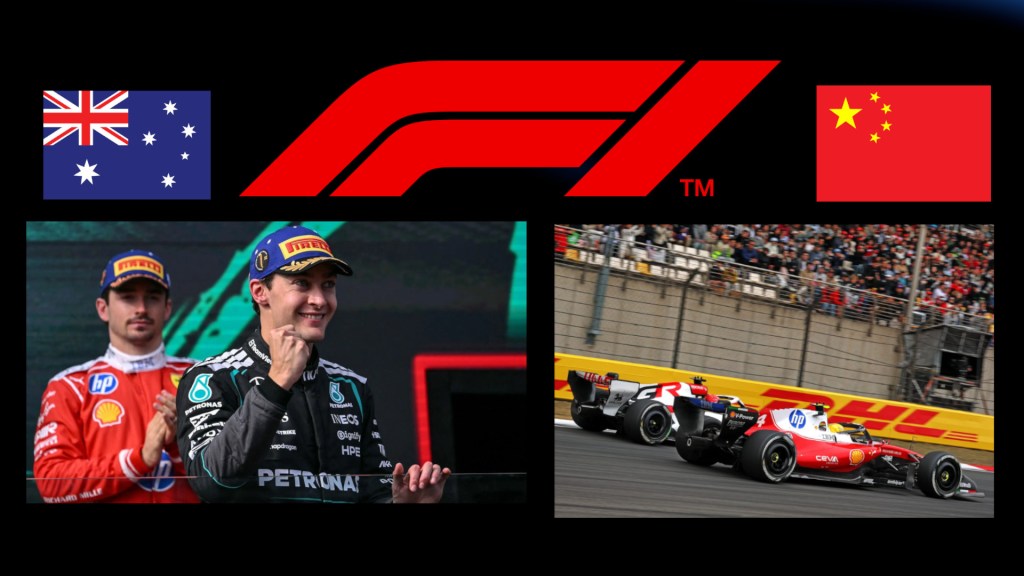
The 2026 Formula 1 championship has two rounds under its belt. This is the very first season that I shall follow from start to finish. What a wild two weekends it has been thus far. Killer time zones, new regulations, breathtaking moments, along with some less enviable twists.
Rookie Excitement
As I’ve written before – albeit in French – I am a newcomer to Formula 1. I’ve been aware of it for most of my life as a sports fan. It would have been impossible not to. First, Montreal is the lone Canadian pit stop for the Canadian Grand Prix (May 24th this year) and, unlike some people, I’ve taken a liking to the local festivities that commence on the Thursday before.
Second, Jacques Villeneuve is not only a former driver, but the 1997 World Champion. The track is named the Circuit Gilles Villeneuve, after his father, who also competed.
2026 is an odd time to step into an F1 cockpit. With extensive new regulations dictating how the cars and engines are made, how races begin, how to handle the beasts during the action, as well as certain inter-race specifics, the teams, from principals to drivers, are wrestling with how to adapt to the new conditions. It’s akin to someone who knew vaguely about American football for years and decided to follow the NFL during the season when the league opted for CFL rules. It’s still American-style football, but of a rather different creed.
Nonetheless, after months of reading articles and watching a plethora of YouTube channels (The Race, Formula 1, Up to Speed, etc), when the weekend of March 6-8 rolled up, I felt sufficiently prepared to have a general understanding of what would unfold.
Wake Up Call: Australia and China
First things first, bless the people who have the time and finances to follow the F1 circuit in person, be it for the entire season or a portion. Not only can they appreciate the (very loud) sounds, sights, and smells, but they don’t have to prepare themselves for tuning in to the event at unusual hours.
The 2026 campaign’s maiden round was set for Australia, more specifically Melbourne’s Albert Park. Sounds great, except that there is a 15-hour time zone discrepancy. As such, it was an 11 PM Saturday night race for those in the Eastern Standard region. I haven’t partied on a Saturday night in donkey’s years, nor is it in my habits to intentionally stay up for something that late. It differs from already being engaged in something that runs that late.
That, however, was only prep work. Round two, on the weekend of March 13-15, took place at the Shanghai International Circuit. The Middle Kingdom’s famous metropolis is a mere 12-hours ahead. Plot twist: the race is scheduled for a 3 PM Sunday start. 12 hours behind translates to…3 AM. Even so, the newcomer’s excitement and the smartphone’s alarm woke me at 2:30 AM to start the coffee pot and cook some vegetables.
Was I a wee bit tired those two Sundays? Yes. Who knows if I will repeat the experience again, but for the first time, it was rather fun.
Play-by-Play Education
If I were to humbly provide blessings to anyone else, it must be the English-language commentators from Sky Sports, led by play-by-play announcer David Croft and analyst Martin Brundle.
Croft and the team do a marvellous job describing the action, succinctly revealing the potency of each moment – from pit stops to battles in the corners. Not only is the action often fast and furious (like Lewis Hamilton and Charles Leclerc battling each other for a podium spot in Shanghai), but the commentators have also had to learn and understand the new regulations.
I can make a mistake. Millions of people are not counting on my description of what transpired in a race. Croft and the gang must be correct and clear on every point and in the moment, not after the fact.
They’ve reiterated some of the finer points of the new regulations, such as overtake mode. This serves two purposes, one obvious, the other subtle. First, it’s critical to describe action-packed sequences for the viewers. Second, there are surely some people watching who are still playing catch-up with the rules!
Race Takeaways
Ah, takeaways. Here is where the nerves kick in. Again, I’ve only parachuted into the championship in summer 2025 after getting swept up by F1 The Movie. Ahem, Academy Award-winning F1 The Movie.
Here goes nothing.
Round 1: Australian Grand Prix
A stunning start to the season with eventual winner George Russell and Charles Leclerc going toe-to-toe for several laps at the start. In fact, the reason why Ferrari’s Leclerc was even contesting pre-season poster boy Russell was his incredible start, jumping from P4 to the lead, if only momentarily.
To that point, Ferrari has clearly mastered the art of a proper start. It’s my understanding that it has something to do with how the engineers designed a smaller turbo for the 2026 regulations. This, as I understand it, means that when the vehicle is revving, it’s more efficient at harnessing power. On the flip side, the smaller unit might be why, after brilliant starts, Ferrari doesn’t finish as strongly as Mercedes.
Hat’s off to Racing Bulls’ Arvid Linblad. 18 years old, first ever F1 race, and he finishes 8th to collect 2 points.
As for Red Bull and McLaren, the two teams that fought to the finish in 2024 and 2025, their engine issues reared their ugly heads early. That is to say that neither defending champion Lando Norris nor all-timer Max Verstappen had memorable races. The latter’s teammate Isack Hadjar retired on lap 11, and Oscar Piastri, the local hero, crashed his car in a pre-race warm-up. Yikes
Round 2: Chinese Grand Prix
Another scintillating start with Mercedes and Ferrari once again engaged in a ferocious early-race tilt, this time Hamilton doing the honours for Scuderia.
After a 1-2 finish for Mercedes in Australia, they do it again in China. Rather than Russell winning and Andrea Kimi Antonelli taking second place, the roles are reversed. Most pundits agreed that the German brand would take top honours in 2026. They seem to have the best car and are the proprietors of a power unit that customer teams McLaren, Alpine, and Williams, are still figuring out.
At 19 years of age, Antonelli is one of the youngest drivers to capture a Grand Prix. Hamilton is elated to finish third. And why not? 2025 was a nightmare.
That said, good on Pierre Gasly to make it to 6th in China, earning him 8 points.
And shoutout to Haas’ Oliver Bearman for finishing in the top five. Observers praised his 2025 performance, during which he outperformed more experienced teammate Esteban Ocon. That trend continues thus far through two rounds in 2026.
Verstappen can’t even finish the race. No wonder he’s not a happy camper.
McLaren…How the mighty have fallen. Both cars have technical issues and do not run a single lap, meaning that through two races, Piastri has watched on the tele. Thank goodness he partook in the Sprint to put a few points on the board.
With that, a nice weekend off before getting up at 1 AM on Sunday, March 29th, for the Japanese Grand Prix!
 Edgar Chaps
Leave a comment