As some people who visit this blog and personal friends may already know, I enjoy reading. The format through which I consume the written word varies- from news articles, analysis, novels, social science books, and studies – but I find myself most at ease and pleased with a book in hand. The best moments about this millennia-old activity are when I become transfixed by the magic of the written word.
Early Bird Catches the Worm
I’m aware that the above expression doesn’t correspond to what we’re talking about, unless we deform its intended meaning. In this instance, “early” refers to the fact that I reaped pleasure from reading as far back as early childhood. Picture-filled storybooks enraptured my attention, each page an adventure in itself. As any good book should, one page promised future excitement by flipping over to the next. One might say I became a bookworm at an early age.
Pardon the pun, but a formative chapter came shortly after. For reasons that needn’t be broached now, I spent much of my free time in late childhood and early teenagehood at a grandmother’s. She, too, enjoyed a good book and her library, while not quite vast, was filled with just the right material for me to transition to novels. Enter the wonderful English detective novelist Agatha Christie, with stories such as And Then There Were None, Murder on the Nile, and The Murder of Roger Ackroyd, conditioning me to life with my nose between pages.
An Easy, Mutually Beneficial Relationship
This might sound unusual, but there is something particular about what happens when a reader and a book come together. Not only are the words on the page speaking to the consumer, but so too is the author. It’s a bit like a three-way friendship between the writer, the reader, and the finished book. The author might have something specific in mind when jotting down on paper or typing on a keyboard, but the reader can take away a slightly or greatly different interpretation or sentiment than intended.
Be that as it may, the practice is as healthy as it is enjoyable. There is no shortage of literature about the activity’s benefits. One can spend hours diving into extended research, like what Oxford University’s research platform (Oxford University Press) published in October 2020, about the association between the brain’s neural activity and grey matter structure when reading.
Alternatively, check out this much simpler, easily digestible article by Paul Wright, M.D., who offers a drive-by overview of the brain’s stimulation. Cognitive skills, improved memory, and even a more varied vocabulary.
Oceans, Seabirds, and Magic
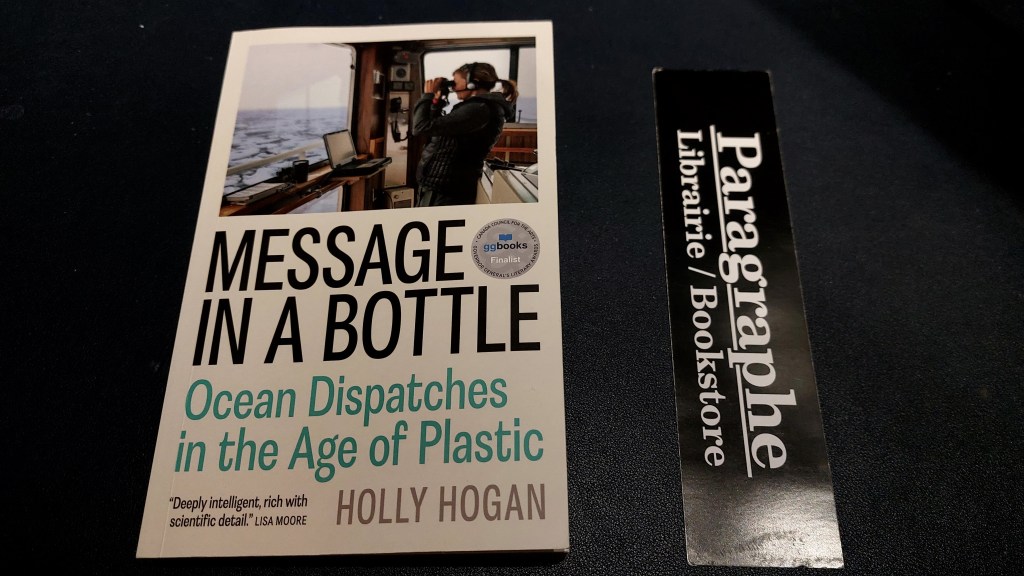
All those fanciful arguments about reading being “good for you” aside, sometimes the level of pleasure comes in an unexpected moment. This occurred most recently when I devoured wildlife biologist Holly Hogan’s Message in a Bottle: Ocean Dispatches in the Age of Plastic.
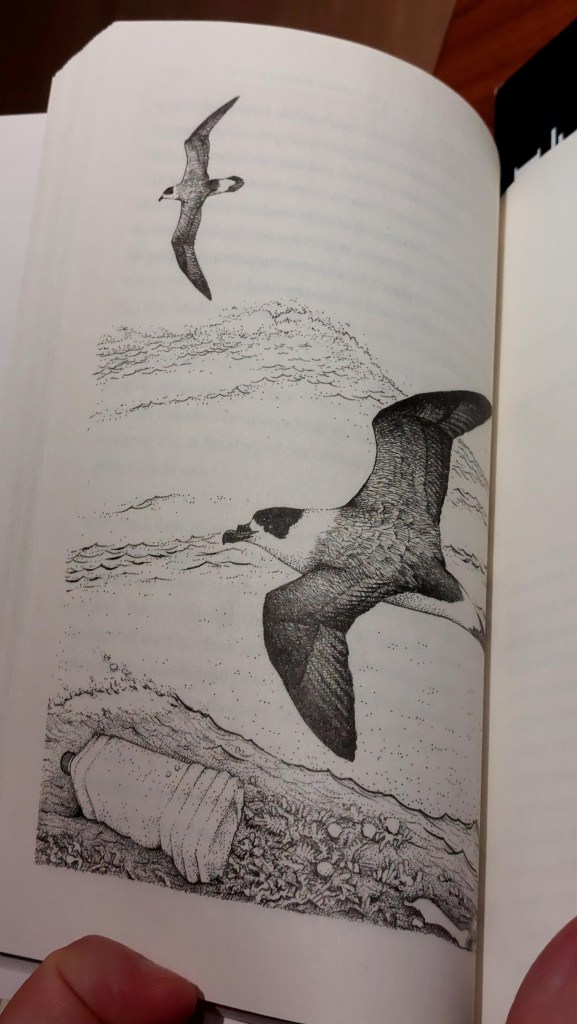
The Newfoundlander has spent her career studying seabirds, from the coast of Labrador to Antarctica. In her 2023 book, she explains, in clear and concise chapters, the changes in population sizes and habits of various species and the causes for said shifts, most notably pollution.
But of course, to understand any issue, context is important. A great communicator, Hogan offers – again, with concision – the context required to comprehend why birds would be at sea anyway and why their habits have altered. Furthermore, she literally explains the ocean. From freshwater ice at the poles, the effects of the excluded salinity, the currents, the planet’s rotation, and how all that affects land and our avian friends. It’s a stretch spanning pages 122 to 131 (chapter 7) and serves as an example of delivering complex information in simple terms for the ordinary human with little prior knowledge.
The magic happened on page 129. Hogan arrives at the part concerning the locations of the warm and cold ocean surfaces (the western part of the oceans for warm, the eastern part for cold). This explains why deserts tend to be on the western side of continents: cold surfaces and high-pressure systems translate to arid conditions. That sequence prompted me to look up Google Maps immediately, and, wouldn’t you know it, a lot of the western coasts (or regions not too far from the western coasts) are, in fact, desert land.
I’ll be damned.
So much information came together at once, most of it unbeknownst to me beforehand, but mixed in with a smidgeon of what I already knew about currents and deserts. The power and comfort of reading that passage was palpable, so much so that I’m struggling to verbalize the ecstasy I was overcome by.
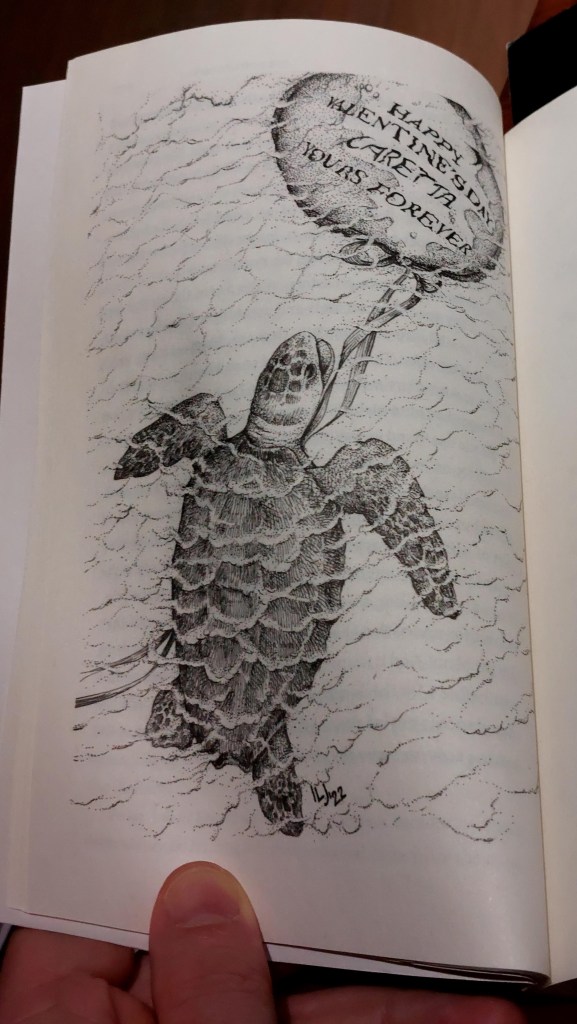
It’s but one example of what can happen when enjoying a good read. Granted, this one is personal. Some may have no interest whatsoever in picking up Message in a Bottle. Others might, yet not feel what I did when reading chapter 7. That’s not the point. Rather, it’s about the intimacy, pleasure, and satisfaction that can come when reading.
Whatever book you’re reading, whatever language you’re reading it in, I sincerely hope you get the same kick. That’s when a book goes from being merely good to a heck of a page-turner.
 Edgar Chaps
Leave a comment