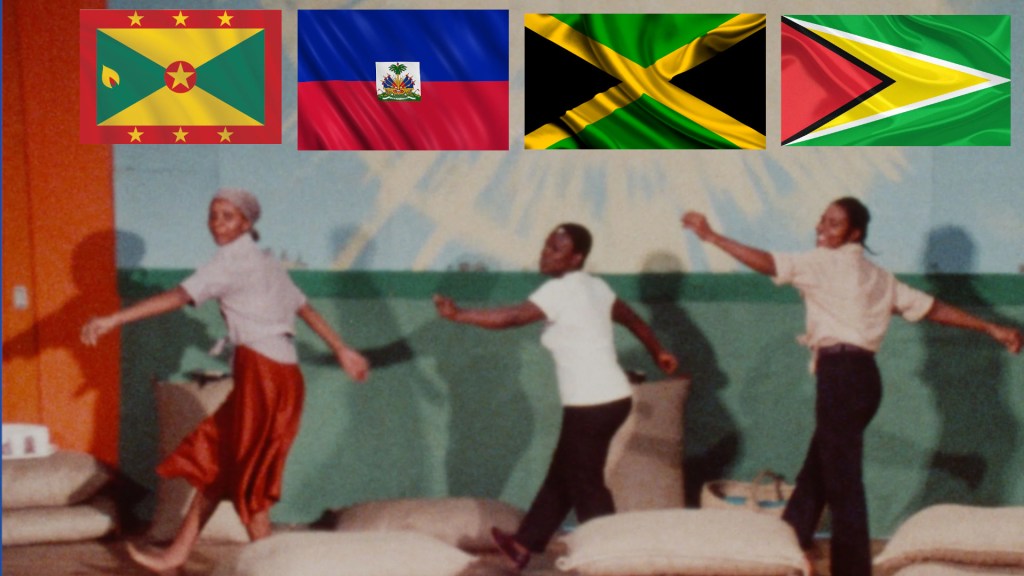
Not long ago the blog published an article about a documentary film I had watched, Bitter Cain. It was an excuse to put down into words some thoughts concerning the storytelling structure of documentaries. That sparked enthusiasm to spend more time with such films. Given that the Criterion Channel featured a small collection of they call Caribbean activist docs, I spent a little over a week in May going through the library. This inspired more observations about how real-life stories are shared through film.
The Info Dump: Haiti: The Way to Freedom (1973)
As per Hati: The Way to Freedom’s synopsis on the Criterion, Arnold Antonin’s picture is considered to be the eponymous country’s first feature-length movie. That it should be a documentary is rather interesting, especially since it was crafted under the dictatorship of Jean-Claude Duvalier. Not under the auspices of, to be clear, but while Duvalier was still holding the island nation’s reigns.
Whereas Bitter Cain – which also concerns itself with Haiti’s tumultuous history – opted for wide ranging interviews and some classroom-like information sharing, The Way to Freedom is drier. In a nutshell, Antonin’s film is what some would describe an information dump, one supported by archival photography and art. Some of the imagery is sufficiently graphic to provide a clear indication of how the locals had a massively rough go of things, from the original Taino population to modern day circa the early 1970s.
Although most of the content is interesting from an educational perspective, an info dump remains just that. That the film exists and was created during the time that it was is noteworthy. That, at least, is beyond dispute. Its birth is more inspiring than the finished product, though. Given that Bitter Cain also provides a clear but concise presentation of the country’s history and features a plethora of interviews with people from all walks of life (the destitute, the rich, farmers, foreign factory owners), I would encourage those curious about Haiti to seek that movie as opposed to Way to Freedom.
All that said, judging by the official website that promotes Antonin’s work, the man has carved an impressive career as a filmmaker.
History From the Winners: Grenada: The Future Coming Towards Us (1983)
Next was Grenada: The Future Coming Towards Us, directed by Carmen Ashhurst, Samori Marksman, and John Douglas. Released in 1983, it practically coincided with a United States-led military coup that overthrew the very government the documentary highlights in celebratory fashion.
Grenada is a nation I know almost nothing about, so movies of this nature can be somewhat challenging to appreciate. How much stock does one put into a film that is unashamedly one-sided? In essence, the subject is the relatively young New Jewel Movement that successfully took over the country’s political institutions from former prime minister Eric M. Gairy. The latter had himself declared the country’s leading statesman in the wake of its 1974 declaration of independence. Unfortunately, Gairy was prone to repressive and violent tendencies.
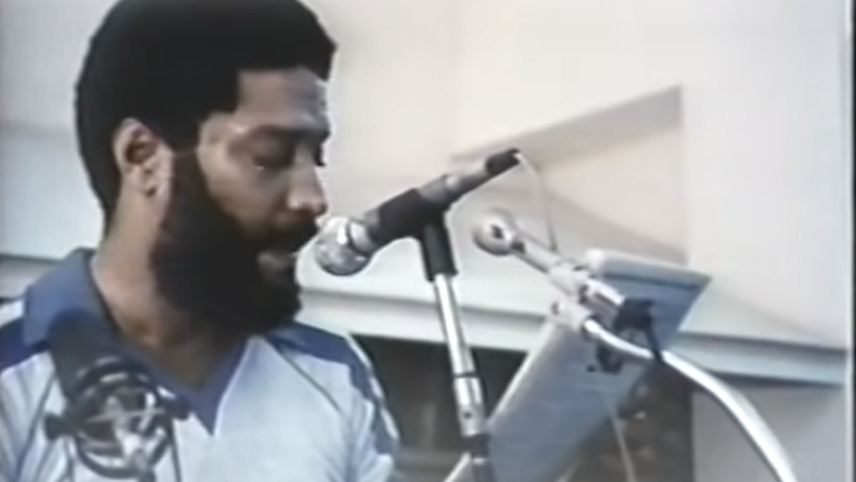
The Jewel Movement took advantage of Gairy’s flight abroad in 1979 to perform a non-violent regime change, supplanting their authoritarian prime minister with the People’s Revolutionary Government (PRG). The “problem,” so to speak, was that the PRG was heavily left-leaning, which didn’t sit well in the eyes of major Western powers, most notably the U.S.
The Future Coming Towards Us is a special brand of documentary. For one, it has no qualms about being pro-PRG. More critically for our purposes, it was made in the wake of a socio-political victory by a group the filmmakers agree with. The old adage of history being written by the winners applies wholeheartedly in this instance. Structurally it is a plain jane feature, but it captures a specific moment in time, one that would suffer a crashing end in the immediate future, unbeknownst to the filmmakers.
Watching it in 2026 as it retells and analyzes events from the late 1970s and early 1980s – in positive light – and knowing that it will end swiftly, is a bizarre and arresting experience.
Slam Poetry: The Terror and the Time (1978)
And now for something completely different. The Terror and the Time, from 1983, was directed by Rupert Roopnaraine and investigates the Guyanese plight for freedom from British rule in the 1950s and eventually gained in 1966.
Lots of horror stories, interviews with historians, academics, activists, and regular folk. However, the curve ball in this case is that the movie is inspired by poems written by Martin Carter, also an activist. I had no clue who Carter was, but it’s now my understanding he is highly regarded in Guyana as one of its greatest poets. His powerful words alarmed the British rulers, who had him arrested twice in the 1950s for dissent.
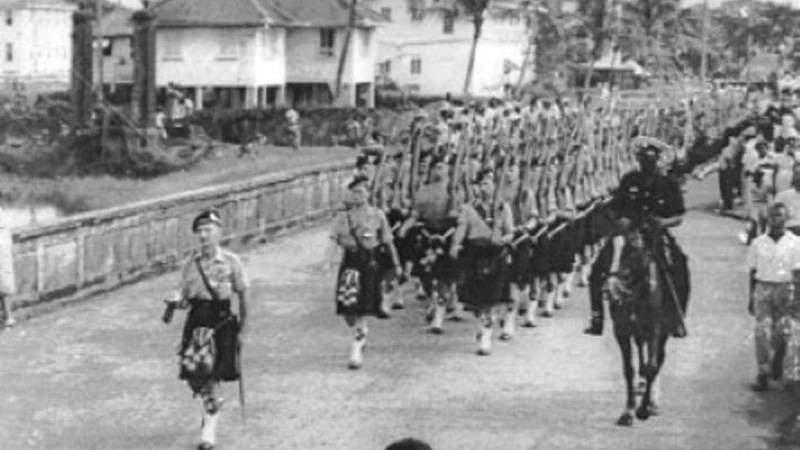
Not content to simply have people read Carter’s words, the poems are audio accompaniment for aggressive visuals edits. Reversed tones in black and white (like the Sabattier effect), close ups of Western lifestyle newspapers advertisements to emphasize attempts to dissuade local culture, urban life caught in slow motion, etc. It’s as though the filmmaker opted to make a documentary filtered through a poetry concert. If David Lynch had made the film, it would have adopted this general style.
Do the visuals and sounds enhance the points the film strives to communicate? I think that’s up for debate. Perhaps if one is more familiar with Carter’s work one can connect to Roopnaraine’s effort more readily. One thing is beyond dispute: it’s different and bold. If you want to take in a documentary that, artistically, marches to the beat of its own drum –– then The Terror and the Time might be for you.
Metaverse: Sweet Sugar Rage (1985)
To cap the article, we’ll spend a few moments on Sweet Sugar Rage, from the directing duo of Harclyde Walcott and Honor Ford-Smith. Released in 1985, it shares the accounts of Jamaican women who labour away in the sugar cane fields – among other jobs. Poor wages, poor working conditions, uninspiring outlooks towards their future, it isn’t exactly light, brunchtime conversation material, but none of these films have that.
That said, what makes Sweet Sugar Rage stand apart is that directors Walcott and Ford-Smith were attracted by the work of a local women-led theatre group called the Sistren Collective. The artists in this collective put on plays for the public about the aforementioned labour issues. Their sketches sometimes feature employees as characters, and sometimes the land and company owners. Thus, the actresses get to comment on those who exploit them. There are no male actors, so male characters get the cross-dress treatment.
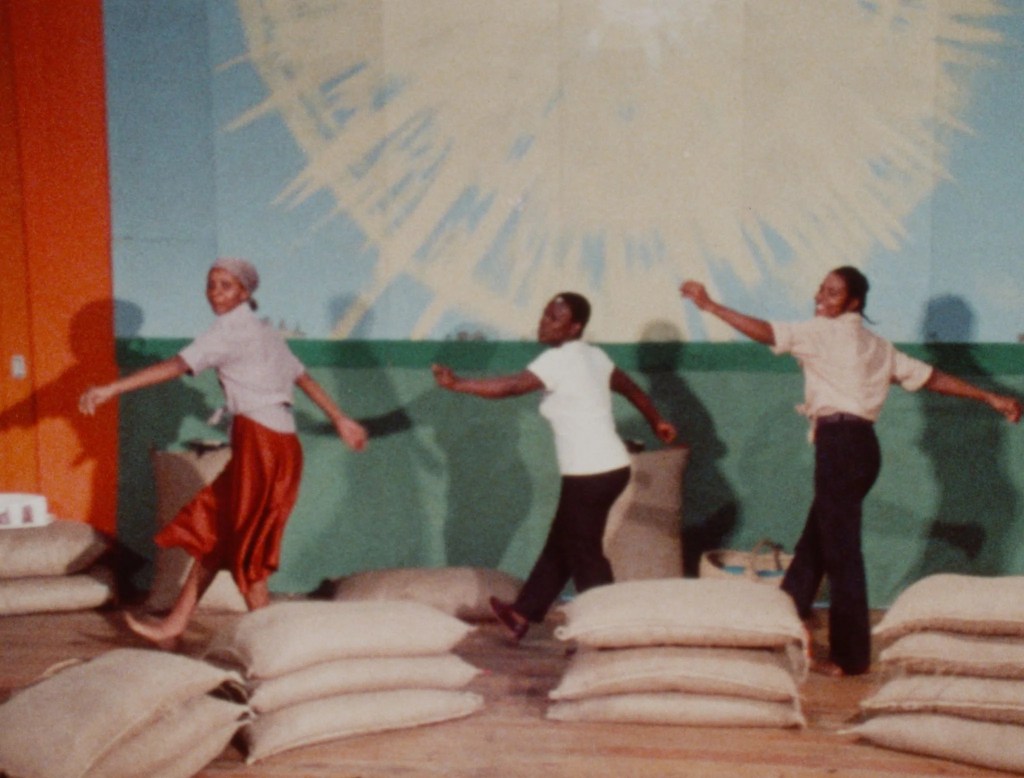
As such, the film has a meta quality about it. It interviews people who experience the daily hardships whilst featuring dramatizations of those hardships, often acted out by people who also live them. While the dramatizations don’t necessarily make the movie better from a structural standpoint, it’s a unique way to discover how locals, or a subset of locals, are dealing with the dire realities of everyday life. Art is all about expression, after all. What better way to harp on important social issues than by getting a community to watch plays about them?
Don’t Judge a Film Genre by its Name
After watching Criterion’s collection of political activist docs from around the Caribbean, the moral of the story is – apart from the obvious Western intervention in Third World nations – do not judge a film genre by its name.
A documentary need not be a series of talking heads. It isn’t a problem if it is. Sometimes the subject matter warrants it and, in the best examples, the interviewees are darn good storytellers. On the flip side, movies like Grenada: The Future Coming Towards Us, The Terror and the Time, and Sweet Sugar Rage are examples of pictures that have something different to offer. It might be because it captured lightning in a bottle with a time capsule, off the wall visuals, or a meta way of sharing what a local population feels about its plight.
Granted, none of the films discussed deal with “entertaining” topics, so there may be people who stopped in the first few lines when they read “Caribbean activist docs.” Fair enough. I’d argue that the article’s macro argument stands: a documentary can relay information in any number of ways. It’s a film genre ripe for considerable artistic exploration, which I admit is not something that had crossed my mind before.
The many faces of documentaries, both regarding content and form.


Leave a Reply