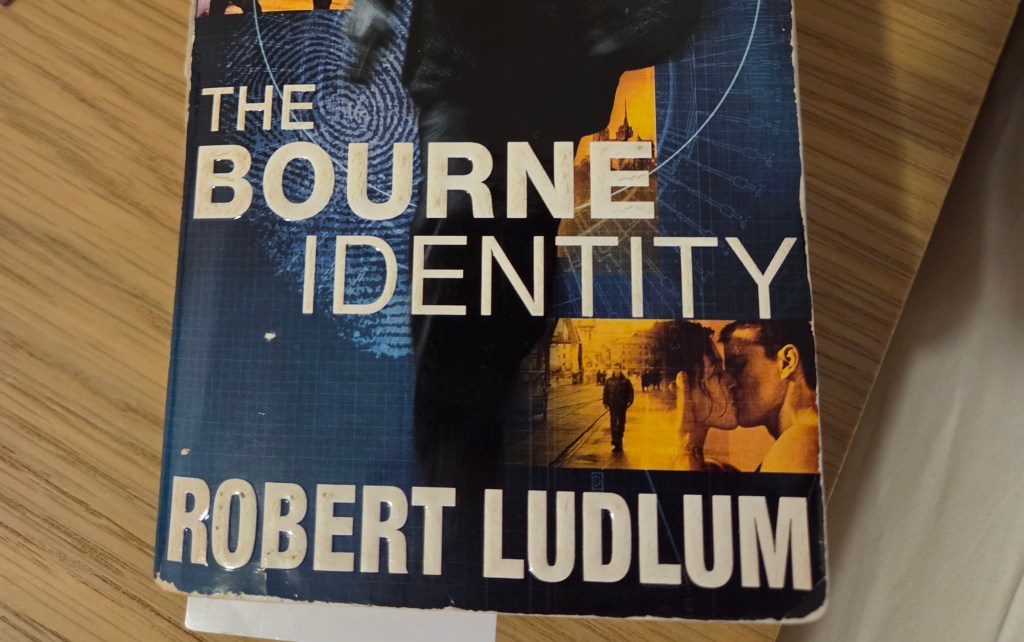
Earlier this summer, I made a point of finally reading a novel that had collected dust in my collection for over two decades. A copy of Robert Ludlum’s most successful novel, The Bourne Identity, had followed me around ever since acquiring the 2002 movie tie-in edition. As a great admirer of the film series, I owed it to myself to discover the source material’s magic. What occurred was like the eponymous character’s journey: a series of incredible discoveries. For someone who knows the film adaptation well, it was akin to landing in an alternate universe.
Robert Ludlum: Human Typewriter
A moment for the iconic character’s creator. Ludlum, an American, passed away in 2001. While the death of any artist gives their admirers pause to reflect on the individual’s life, this was particularly bittersweet. The very next year, the heralded Doug Liman-directed, Matt Damon-starring Hollywood translation blew up on the silver screen. By the summer of 2002, everyone knew who Jason Bourne was, even if the protagonist didn’t.
Earlier decades witnessed the cinematic adaptations of other Ludlum efforts, such as The Osterman Weekend(1983) and The Holocroft Covenant (1985). Neither came close to Bourne’s heights. If Bourne’s source material is anything to go by, it’s a wonder more of his oeuvre hasn’t caught the attention of big-studio producers.
It wasn’t as though Ludlum was a slow writer. Quite the opposite. By the time he passed away, 27 novels had been sent to publishers, with some marketed under the pen names Jonathan Ryder and Michael Shepperd. Furthermore, he only got around to putting pen to paper (or finger to typewriter) in his early forties. Prior to that, he had spent a career in the theatre, both as an actor and producer. This was despite his parents having discouraged him from doing so earlier in life.
He was also a former Marine in the US. Marine Corps, albeit after the Second World War. In some respects, this experience surely laid the foundation of his inspiration for so many plots involving men of action, not to mention their international flavour. Alongside that, decades of putting on shows unmistakably honed his flair for storytelling.
The Bourne Onion Layers
Summer 2026 was not my first attempt at cracking open the famous 1980 espionage thriller. In my younger days, I had taken a crack at it, yet for whatever reason – perhaps being a less patient reader at the time – I never finished it. This time would be different.
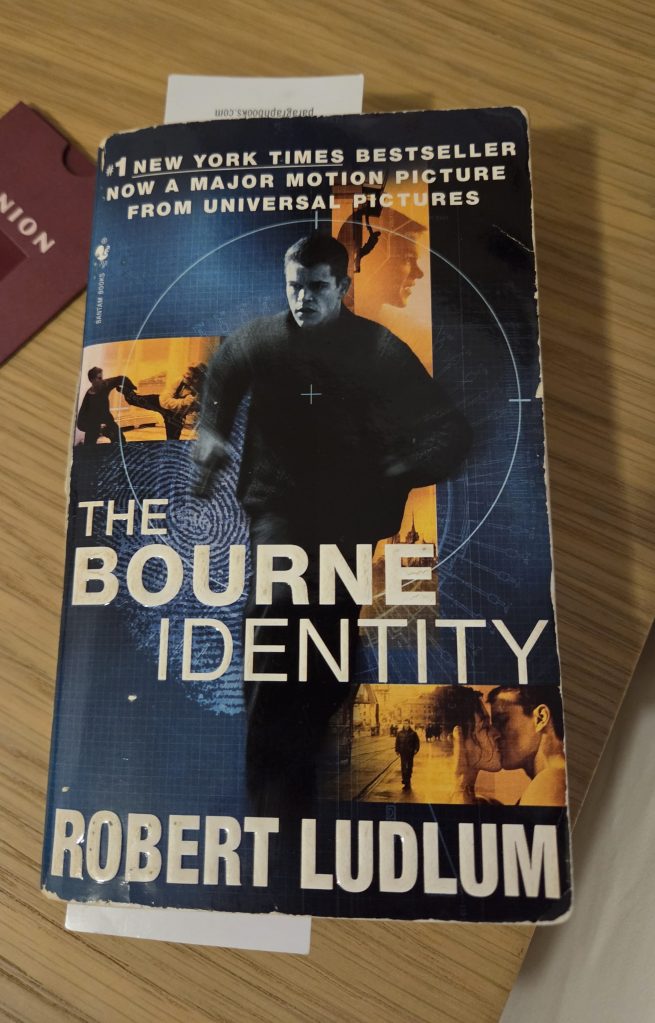
At 535 pages, one can assume that the novel delves deeper into the titular character than the motion picture. Liman’s effort is a snappy, if character-centric, romp through Europe with a couple of very attractive actors in Damon and Franka Potente. That isn’t a criticism per se. The movie was a hit and to this day remains one of my favourite spy-action stories. It spawned three direct sequels, a spin-off, and a streaming show that lasted one season, so it obviously did something right. Lest it be overlooked, there was also a two-part television series in 1988.
As is so often the case, the one thing a book can do that any visual medium cannot is properly get into the characters’ minds. This is, above all else, the key distinction between the novel and its movie adaptation. As great as Damon is in the role, reading Bourne’s thought process and experiencing the discombobulated images and memories erupting from his Amnesia-riddled mind is a far more complete experience.
Ludlum’s approach is as hands-on as can be given the circumstances under which the central figure exists. It’s a bold approach, one that could have been the book’s ruin in less capable hands. Getting a reader to care about someone who doesn’t even know who they are is no easy task. Reactions are muted and decisions simultaneously deliberate and confusing. Sometimes Bourne does something out of inexplicable instinct, and other times because of what little knowledge he has of himself and the latest challenge.
Perhaps caring is too strong a word. Is it a case of curiosity? Pity? Morbid interest in witnessing someone as mentally frail as Bourne fumble around for the first few chapters? Whatever the answer, Ludlum pulls it off.
Multiverses of Bourne
As the story progresses, it becomes increasingly evident that the filmmakers loved its premise but took a vastly different approach. Therein lies a key reason why reading Ludlum’s text made for such a thrill. A novelization read in backwards order, this most certainly was not.
Knowing how commonplace multiverses are in modern popular culture, it was just like that. The 1980 source material and 2002 movie follow the same general outline yet take radically different right and left turns. For one, the novel is infinitely more detailed with respect to the hero’s backstory. Where he is from, what he did in the military, the secretive government program that made him an assassin, etc.
One might argue the book is dense, and it would be hard to disagree. Ludlum loved his conspiracies as the basis for adventure, and The Bourne Identity plays that very note. Rather than opt for a “just go with it” philosophy that gets the job done whilst playing somewhat fast and loose with its own rules, the author hopes the reader knows just about everything there is to understand about Bourne, covert Vietnam War operations, and the deviant Treadstone program.
Moreover, Marie, the love interest, is a wholly different creation. A Canadian economist employed by the federal government, she proves vital multiple times when, on occasion, the key to Bourne’s secretive past is to simply follow the money. The film version, while delightful, is German and, as best as one can tell, doesn’t have her life completely figured out yet.
Similar Yet Different
In a nutshell, Bourne the book is recognizable enough for those who loved the film, yet sufficiently different for those who’d rather not simply experience the film in paperback format.
Bourne emotionally beats himself up a lot, for that matter. The slow realization that he might have been a nasty piece of work before his amnesia doesn’t sit well with him at all. Marie is the backbone and heart who wills him toward the light at the end of the tunnel. The book features a pivotal scene that enshrines her belief that Bourne must be a good person, irrespective of whatever evidence points to a different assessment.
The novel, despite its density (some might rejoice, but I didn’t need this much backstory), was an engaging, enjoyable read. As I type these words, I’m at chapter four of its sequel, The Bourne Supremacy (1986). It’s nearly 200 pages longer than Identity. This begs the question: How deep into the shadowy government ops weeds does Ludlum go into this time?!?
All the same, going on this vaguely familiar yet also highly distinct journey with Bourne is proving to be a great time, one I surely won’t forget.


Leave a comment