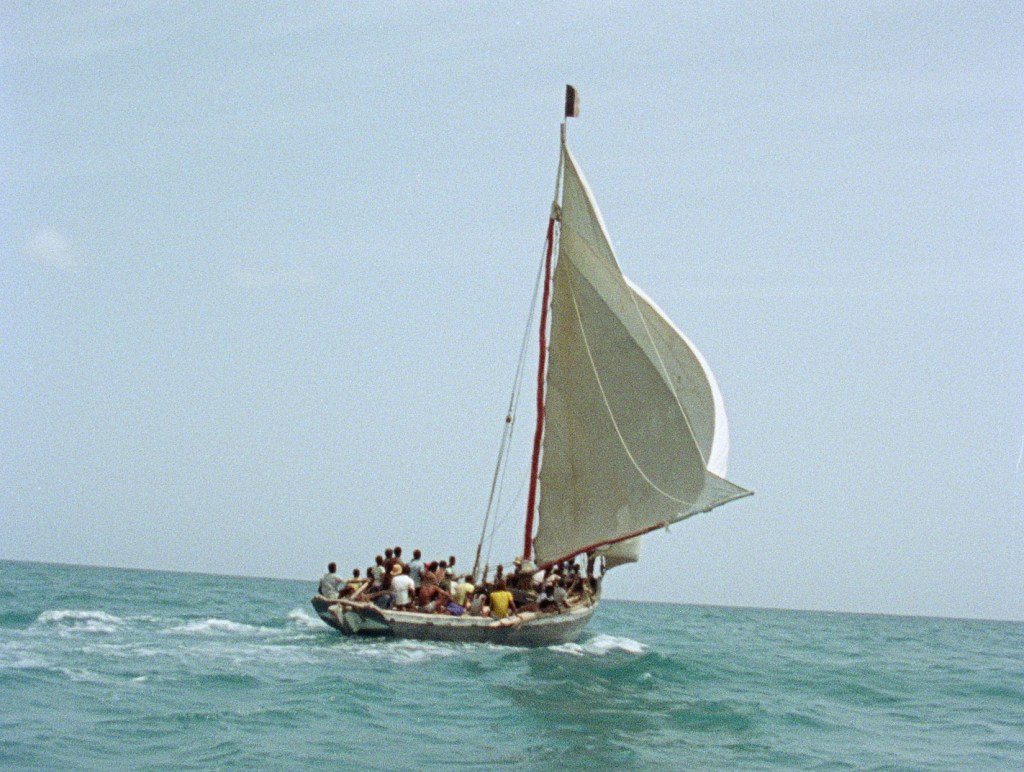
First things first, I don’t watch enough documentaries. Not that there should be any arbitrary threshold denoting whether I’ve fulfilled a quota. We all consume what films and shows we want and enjoy. That said, given that I have a penchant for news reporting and analysis, one would think I’d consume more of them. Every once in a while, I do, and nearly every time I’m reminded of how important storytelling structure is to the genre. This past weekend’s reminder was Bitter Cane from 1983.
Haiti’s Long and Arduous Road
Bitter Cane, which is currently available to stream on the Criterion Channel, was released in 1983. Although the credits claim that it was directed by a certain Jacques Arcelin, that was merely a nom de plume for the real filmmakers who wished to keep their identity a secret.
Ben Dupuy and Kim Ives were, in fact, the real people behind the project. They worked on the ground in Haiti and the United States to bring the film to life. The secrecy is explained by the fact that back in the 1980s, Haiti was governed by Jean-Claude Duvalier (also known as “Baby Doc” Duvalier), who followed in his late father’s footsteps, François “Papa Doc” Duvalier, in squashing political opposition. You had nothing nice to say about the country’s economic and socio-political struggles? Then don’t say anything at all.
Or make a documentary about it from the shadows.
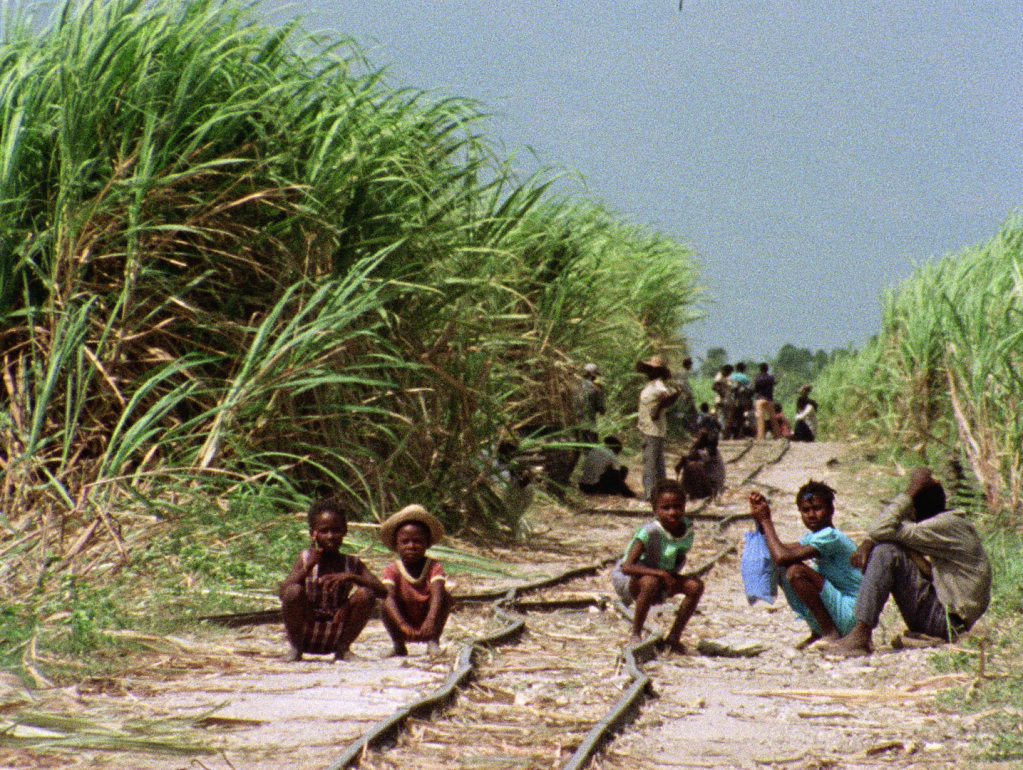
His time in power would end just a few years later in 1986, although the country has, unfortunately, never had its time to shine in the spotlight. Montreal is home to a significant portion of the Haitian diaspora, so it’s a country one living in the city hears about every once in a while. Truth be told, there is rarely good news coming out of the island nation.
Bitter Cane, in its brief 76-minute run time, highlights the country’s history from independence in 1804 to the early 80s, with emphasis on the “now,” which was, well, back then. For anyone with vague notions of the Caribbean country’s history – or none at all – it functions as a solid primer.
A Documentary is also a Story
It was only towards the end of the picture that the filmmakers’ talent struck me. To be clear, I didn’t think the film was poor. It was a good doc, by and large. However, as the action shifted intermittently between talking heads back in Haiti to workers losing their jobs in factories in the United States (because U.S. companies would rather pay employees a couple of dollars per day in Haiti than whatever the minimum wage was per hour in the U.S. in 1983), I understood how well-tailored the film was.
A documentary is a lot like a work of fiction, the latter of which garners much more notoriety in the world of cinema, commercial or otherwise. A doc that settles for spitting facts and data at the rate of a Gatling gun without a clear road map is no more than a data dump. Rather, a documentarian worth their salt will figure out the thesis and throughline of the subject; it’s story, if you will.
Although Bitter Cane emphasizes Haiti’s plight more than anything, the sharp edit to the streets of Brooklyn brought the movie together. Brooklyn, because that city also houses much of the Haitian diaspora, who, as non-U.S. citizens, had to endure harsh labour conditions. Back home, American companies – whose representatives seem quite chuffed at being interviewed about how great it is to have relocated – are shafting the locals with pathetically low wages and even worse working conditions than in America.
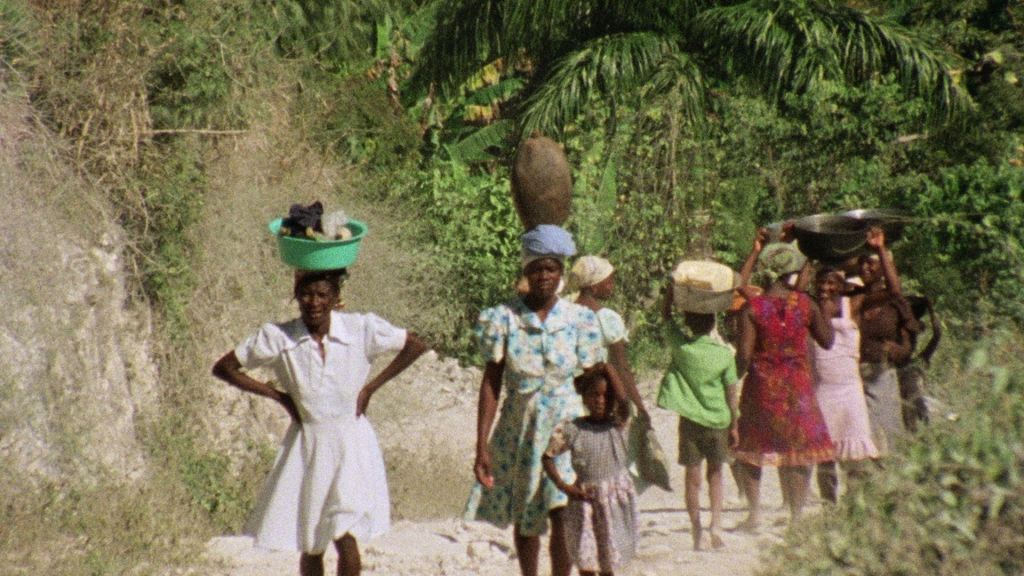
This tied together nicely with the film’s discussion about the United States long-standing history of economic and political involvement in Haiti. For whatever reason – perhaps because American foreign policy has affected dozens upon dozens of bigger countries – the historical relationship between them is not a hot topic. Except that it is a hot topic for Haitians and has been since 1915. 1915!
Military control, a series of puppet governments, industries relocating for favourable budgetary setups, there is a century’s worth of incidents and unbalanced ties between the two nations.
Come Together
It makes the work of documentarians, the good ones at least, that much more impressive. I have this knack of expecting just a ton of information from a doc. That’s fine in the grander scheme of things. Assuming that the filmmakers have done their due diligence and fact-checked the information, I would hope that a doc shares valuable knowledge about a given topic.
But a documentary with a well-tuned idea, an idea that can be explored in several segments, each one bleeding organically into the next, is even more satisfactory. Speaking personally, it also helps with remembering some of the facts. If the story is good – the story of a country, its people, its culture – then the data dump is more easily comestible.
For one, here is my shoutout to Bitter Cane and the people who made it happen. Then again, so much has happened in Haiti since 1983 that much of what the film broaches feels like a lifetime ago. As such, here is my shoutout to documentaries, specifically those with solid storytelling structures.
At least until I forget how much I enjoy a good doc and am reminded of it again sometime in the not-too-distant future. Hopefully.


Leave a Reply